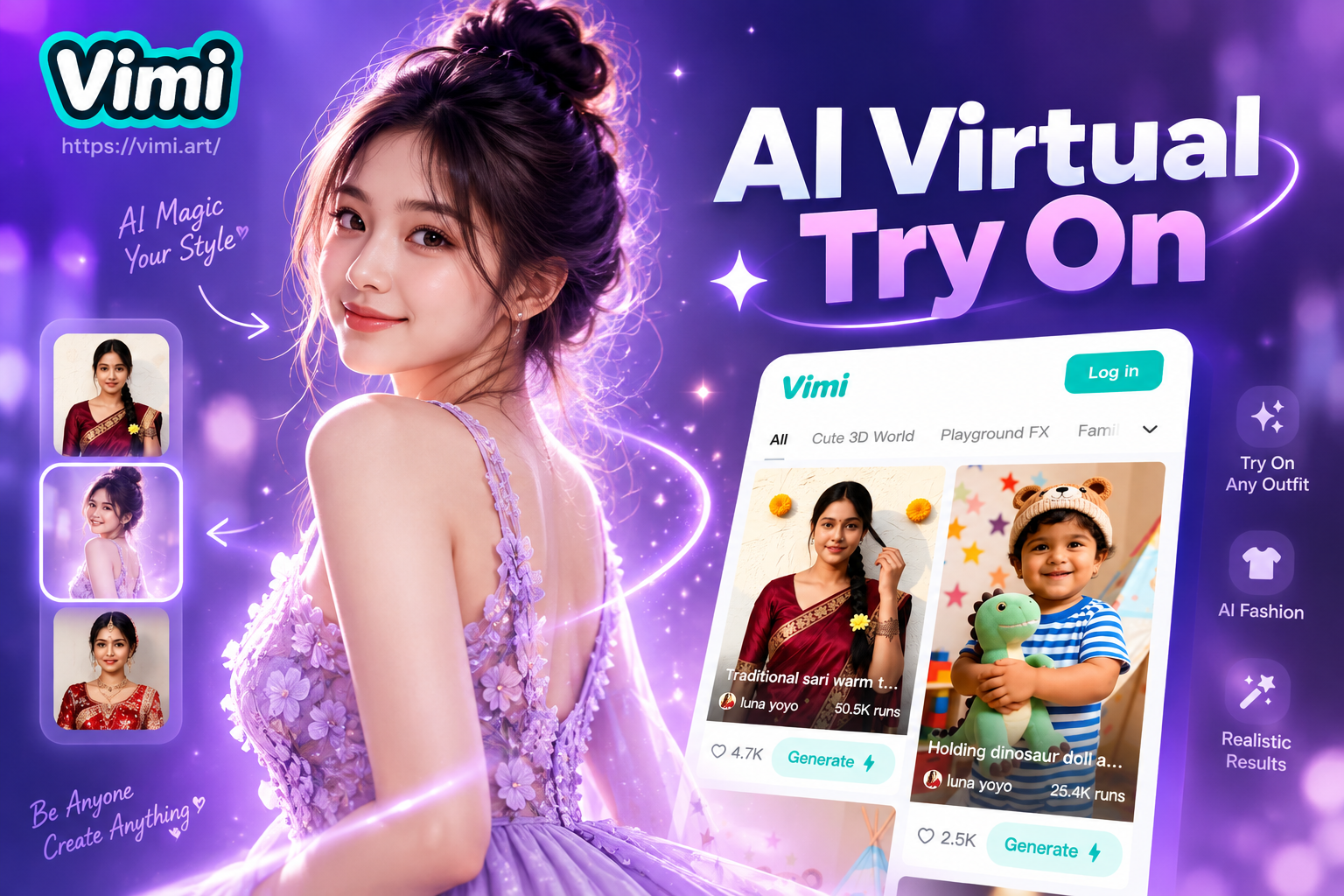
What is AI Virtual Try On?
AI virtual try on is a digital technology that uses artificial intelligence, primarily computer vision and generative adversarial networks (GANs), to superimpose clothing, accessories, or cosmetics onto a person's image or video feed in a realistic, real-time manner. It simulates the in-store fitting room experience from the comfort of your phone.
How Does AI Virtual Try On Technology Work?
The process typically involves several sophisticated AI-driven steps:
- Body Mapping & Landmark Detection: The AI first analyzes your uploaded photo or live video feed. It identifies key body landmarks such as shoulders, elbows, wrists, waist, and ankles. For garments, it maps the silhouette; for accessories like glasses or earrings, it pinpoints facial features.
- Garment Digitization & Warping: The clothing item is digitally prepared in a 3D or 2.5D format. When you select an item, the AI algorithm warps and deforms this digital garment to match the perspective, pose, and body shape detected in your image, ensuring it looks natural.
- Realistic Rendering & Lighting: This is where the magic happens. The AI renders the virtual item onto your body, accounting for lighting, shadows, fabric texture, and how the material would realistically drape, fold, or cling. Advanced systems can even simulate the movement of fabric in videos.
- Seamless Composition: Finally, the AI composites the rendered item with your original image, blending edges and ensuring the virtual item looks like a natural part of the photo, not a clumsy cut-out.
The Core Benefits of Virtual Try On
This technology offers advantages for both consumers and retailers, transforming the shopping journey.
For Shoppers
- Confidence in Purchase: The number one benefit. You can see exactly how a dress fits your body type, how a shirt's color complements your skin tone, or how a pair of glasses frames your face before buying, drastically reducing uncertainty.
- Convenience & Speed: Try on dozens of outfits in minutes without ever leaving your couch or waiting for a fitting room. It's shopping streamlined for the digital age.
- Reduced Returns: By making more informed purchases, customers are less likely to return items due to poor fit or style mismatch. This saves time, money, and reduces packaging waste.
- Personalized Discovery: AI can suggest items that suit your detected style, body shape, and past preferences, creating a more curated and effective shopping experience.
For Retailers and Brands
- Increased Conversion Rates: Interactive experiences keep users engaged longer and provide the visual reassurance needed to click "buy." Studies show virtual try ons can boost conversions significantly.
- Lower Return Rates: As mentioned, fewer returns mean higher profitability and more sustainable operations.
- Valuable Data Insights: Brands gain anonymized data on how different items look on various body types, which styles are tried on most, and what leads to a sale, informing future design and inventory decisions.
- Enhanced Brand Modernity: Implementing this tech positions a brand as innovative and customer-centric, appealing to tech-savvy shoppers.
Where is AI Try On Used Today?
The applications extend far beyond just dresses and shirts.
Fashion & Apparel
This is the most common use. Major retailers and direct-to-consumer brands use it for tops, bottoms, dresses, outerwear, and even full outfits. Some systems allow you to mix and match separate items.
Eyewear & Jewelry
Perfect for products where fit and style on the face are crucial. Virtual try on for glasses, sunglasses, earrings, necklaces, and watches is extremely popular and highly accurate.
Beauty & Cosmetics
Try on thousands of shades of lipstick, eyeshadow, blush, and foundation. The AI can account for your skin's undertone and lighting to show how a product would truly look, even simulating different finishes like matte or gloss.
Footwear
Some advanced apps can overlay shoes onto a photo of your feet, giving a sense of how the style looks, though detailed fit is harder to gauge than visual style.
Home Decor & Furniture
While not "trying on" in the traditional sense, similar AR/VR technology lets you visualize how a sofa, rug, or paint color would look in your actual living space, which is the home decor equivalent.
The Future of Virtual Try On Technology
The technology is evolving rapidly. Future trends include:
- Hyper-Realistic 3D Avatars: Creating a true-to-life digital twin of yourself for the most accurate fit prediction across all brands.
- Social & Shared Experiences: Trying on clothes with friends in a virtual space or streaming your "digital fitting room" session for feedback.
- Integrated Body Measurements: Using AI to take accurate body measurements from photos for made-to-order or perfectly sized clothing.
- Metaverse Fashion: Virtual try on will be essential for outfitting your digital identity in virtual worlds, gaming, and social platforms.
Challenges and Considerations
While promising, the technology faces hurdles. Accurate representation across diverse body types, skin tones, and hair textures is an ongoing challenge for AI developers. Ensuring realistic fabric simulation for all materials, from silk to denim, requires immense computational power. Furthermore, privacy concerns around user photos and body data must be addressed with transparent policies and secure infrastructure.
AI virtual try on is more than a gimmick. It's a practical tool bridging the gap between online convenience and in-store confidence. As the technology becomes more accessible and accurate, it will redefine not just how we shop, but how we interact with fashion and personal style in a digital-first world. The fitting room of the future is already in your pocket.