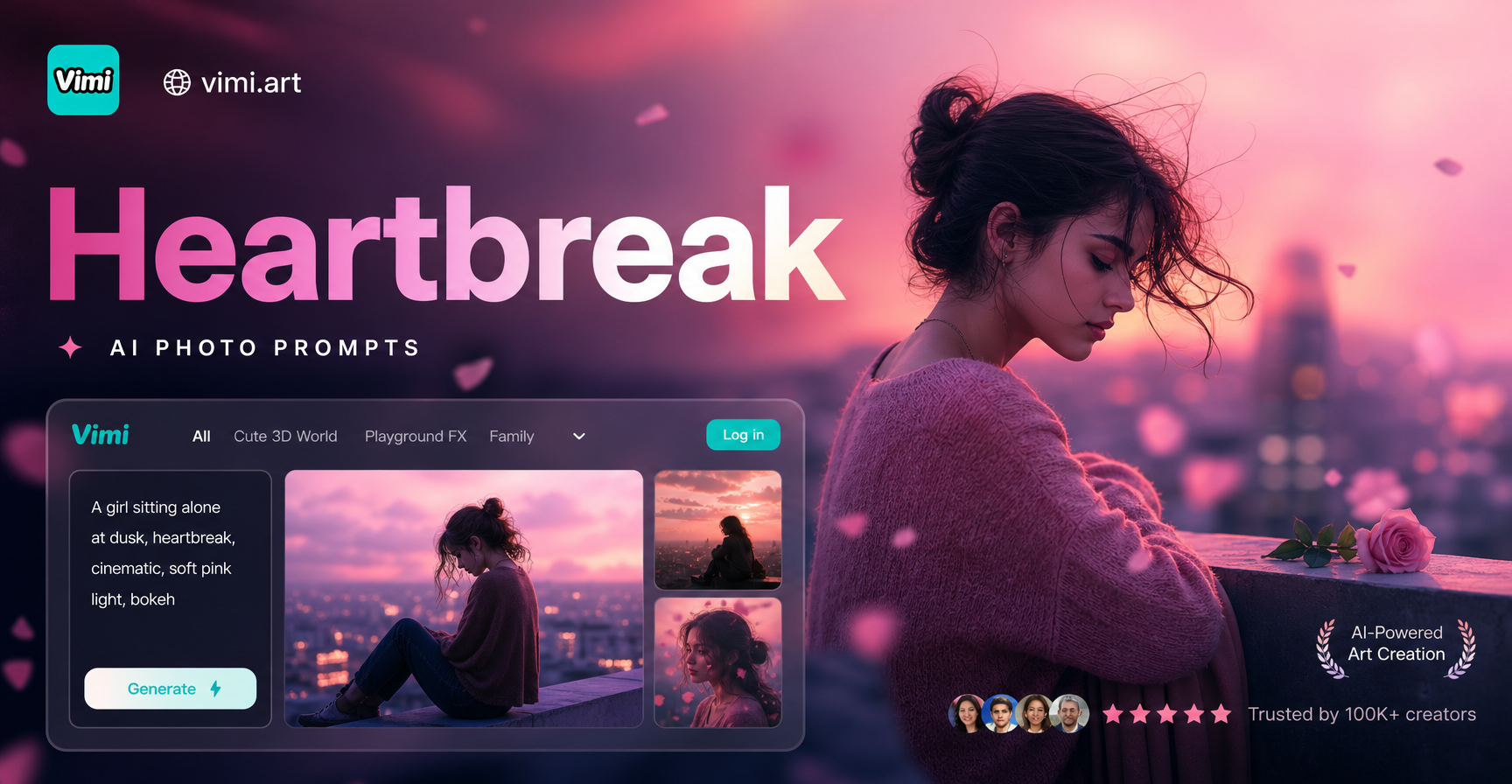
Heartbreak is one of the most universal emotions, and AI image generators have become a powerful way to turn that feeling into visual art. Whether you want to create a moody portrait for a song cover, a symbolic still life for a personal project, or a cinematic scene of separation for a short film, the right prompt makes all the difference. This guide collects specific heartbreak AI photo prompts you can use directly in vimi. Each prompt is written to produce a different kind of heartbreak image, from quiet solitary portraits to surreal landscapes of longing. You will also learn how to adapt these prompts and fix the most common weak results.
Why Heartbreak Is a Powerful AI Photo Theme
Heartbreak gives AI generators a lot to work with because it has strong visual associations. Rain, empty spaces, broken objects, cool color grading, backlighting, and lone figures all communicate loss without needing a single word. AI models understand these visual cues well. When you combine them in a prompt, the generator can produce images that feel emotionally consistent and visually striking. The best heartbreak AI photo prompts do not just say a person is sad. They place that person in a scene that reinforces the sadness through lighting, color, weather, and composition. This is why the prompts below include specific details like rain on a bus window, a half empty bed, a cracked mirror, or a phone screen with a missed call. Each detail gives the AI more to interpret, which leads to much better results.
25 Heartbreak AI Photo Prompts
These prompts are grouped into five categories. You can copy them directly into vimi or adapt any detail to match your own vision. Each prompt is written as a complete descriptive sentence so the AI does not need extra context.
Solitary Portraits
1. Rain at the Bus Stop. A young woman standing alone at a bus stop at night, rain falling, city lights blurred behind her, wet hair, tear streaked face, cinematic film still, shallow depth of field, melancholic blue and orange color grade.
2. Window Light Grief. Close up portrait of a man looking down with a faint sad smile, soft window light from the side, desaturated colors, 85mm lens, film grain, emotional vulnerability, muted gray tones.
3. Unmade Bed. A person sitting on the edge of an unmade bed in a dark room, morning light through blinds, holding a framed photo, quiet sorrow, realistic photography, cool shadows.
4. Car Interior. A woman leaning her head against a car window in a parked car at night, rain drops on glass, distant street lights, pale reflection, intimate documentary style, low contrast.
5. Bathroom Floor. A young man sitting on a bathroom floor with his back against the wall, dim overhead light, tiles in cold blue tones, knees pulled to chest, empty pill bottle on the sink, raw emotional realism.
Symbolic Still Life
6. Broken Cup. A close up still life of a shattered coffee mug on a wooden table, steam still rising from the spilled coffee, soft morning light, blurred kitchen background, symbolic of a broken relationship, muted earthy colors.
7. Dead Flowers. A vase of dried and wilting roses on a windowsill, dust particles in a beam of light, faded wallpaper, nostalgic and sorrowful mood, film photography aesthetic.
8. Torn Photograph. A torn photograph of a couple lying on a wooden floor, one half missing, soft dramatic side light, shallow depth of field, emotional storytelling, warm and cold color contrast.
9. Empty Ring Box. An open empty ring box on a nightstand, morning light, blurred bed in the background, subtle melancholy, minimalist composition, high contrast shadows.
10. Missed Call Screen. A smartphone lying face up on a table showing a missed call notification, dark room, screen glow reflecting on the surface, lonely and quiet atmosphere, cinematic close up.
Narrative Scenes of Separation
11. Train Platform Goodbye. A man and woman standing apart on a train platform, one boarding a train, the other looking down, steam and cold blue light, cinematic composition, parting moment, emotional distance.
12. Airport Window. A person standing by a large airport window watching a plane take off, hands pressed against the glass, soft backlight, blurred travelers in the background, lonely and reflective mood.
13. Empty Side of the Bed. A woman lying awake in bed facing the empty side, rumpled sheets, dim bedside lamp, dark blue room, quiet heartbreak, realistic photography.
14. Last Text Message. A close up of a phone screen showing a final text message that was never answered, tears on the screen, dark room, glowing screen, emotional intensity, macro photography.
15. Wedding Dress Alone. A bride sitting alone in a dressing room chair, still wearing the wedding dress, head bowed, harsh ceiling light, scattered petals on the floor, poignant and cinematic.
Cinematic Abandonment
16. Empty Apartment. A wide shot of an empty apartment with a single chair in the middle, moving boxes, cold window light, dust in the air, abandoned feeling, cinematic wide angle, desaturated blue gray palette.
17. Rain on Memorial. A person standing in front of a closed cafe in the rain, neon sign flickering, puddle reflections, long shadows, moody night scene, film noir style.
18. Broken Mirror Reflection. A person looking into a cracked mirror, their reflection fragmented, low key lighting, dark bathroom, symbol of broken identity after loss, surreal and emotional.
19. Abandoned House Porch. An old wooden porch with an empty rocking chair, overgrown vines, gray sky, a forgotten sweater hanging on the railing, melancholic rural scene, analog film look.
20. Empty Highway. A lone figure walking along the shoulder of an empty highway at dusk, long shadows, distant storm clouds, cinematic wide shot, feeling of being left behind.
Surreal Heartbreak Landscapes
21. Heart Made of Storm. A giant translucent human heart made of storm clouds floating above a dark sea, lightning inside the heart, rain falling upward, surreal concept art, moody color palette.
22. Forest of Lost Messages. A foggy forest where trees are made of crumpled paper and glowing text messages, a lone path disappears into mist, dreamlike and sorrowful, digital surrealism.
23. Glass Tears. A close up of a human eye with a tear turning into tiny glass shards as it falls, macro photography, dark background, emotional and surreal, high detail.
24. Floating Away. A person dissolving into a flock of birds above a rooftop, their body becoming weightless and translucent, sunset light, surreal emotional transition, cinematic fantasy.
25. Melting Memories. A portrait of two faces merging and melting into each other, one fading, watercolor style, muted colors, concept of fading memory after heartbreak, ethereal and sad.
How to Adapt These Heartbreak AI Photo Prompts
These prompts are starting points, not rigid formulas. You can change the subject, setting, or mood without losing the emotional core. For example, if you want a male subject instead of a female, simply replace the pronoun and adjust the clothing or pose. If you want a warmer or colder emotional tone, modify the color grade. Replace rainy nights with golden hour loneliness if you prefer a nostalgic heartbreak instead of a dark one. You can also combine elements from different prompts. The train platform goodbye can become a rainy airport goodbye by swapping the location and adding rain. The key is to keep the specific visual details that make heartbreak readable, such as empty spaces, solitary figures, broken objects, and moody lighting. Adding a single unexpected detail, like a child's toy left on a bench or a pair of shoes still by the door, often makes the image feel more personal and less generic.
Common Problems and How to Fix Them
Even a good heartbreak AI photo prompt can produce weak results. If the image looks too generic, add more sensory details like the texture of wet fabric, the color of a wall, or the type of light source. If faces look distorted, simplify the prompt by removing facial expression details and adding a style reference or choosing a realistic photography filter. If the mood feels over lit or too cheerful, reinforce the lighting and color words, such as cold blue tones, dim light, heavy shadows, or desaturated colors. If the image is too busy, reduce the number of elements and focus on one strong symbol. For example, instead of describing an entire cluttered room, describe only the broken cup and the steam. If the AI mixes two subjects or adds unwanted text, remove any mention of text messages or use simpler prompts. Finally, always generate multiple versions and pick the one that best matches the emotion you want.
Generating Heartbreak AI Photos in vimi
vimi is a mobile AI design app that makes it easy to turn these heartbreak AI photo prompts into high quality images. Download vimi from Google Play, open the AI image generation tool, paste one of the prompts above, and choose a style filter that matches your mood. vimi offers many filters such as realistic photography, cinematic quality, film grain, watercolor, and moody color grades. You do not need any complex prompt engineering skills. Just use the prompt as written or make small edits. After generating your image, you can save it directly to your phone and share it on social media. The app is only available on mobile, so make sure to download it before you start creating.
Heartbreak is a difficult emotion, but expressing it through visual art can be deeply cathartic. These heartbreak AI photo prompts are designed to help you create images that feel real, symbolic, and emotionally powerful. Start with one prompt that resonates with you, adapt it to your own story, and let the AI help you turn pain into a piece of art.